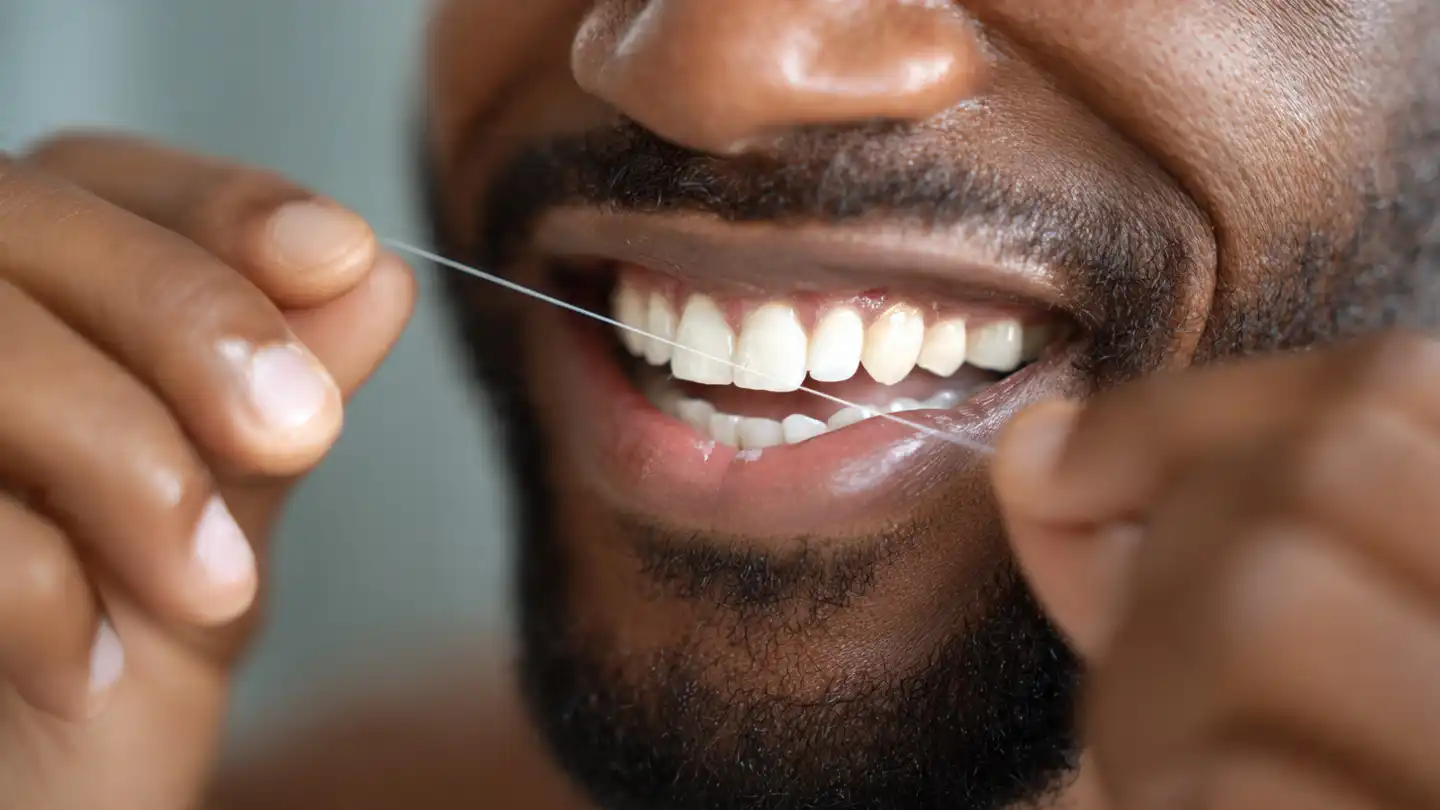
Brushing twice a day is essential, but a toothbrush cannot clean every tight space between your teeth. Dental floss helps remove plaque and food debris from areas that brushing may miss, especially along the sides of neighbouring teeth and near the gumline.
If you are not sure how to use dental floss properly, the technique matters. Flossing too aggressively can irritate your gums, while simply pushing floss between the teeth without cleaning the tooth surfaces does not do the job well.
How to Use Dental Floss Properly
Use this simple step-by-step method:
- Take a long enough piece of floss. Use roughly 40–45 cm so you have enough clean floss to move from tooth to tooth.
- Wrap the floss around your fingers. Leave a short working section between your hands and keep it controlled with your thumbs and index fingers.
- Guide the floss gently between two teeth. Do not snap or force it into the gums.
- Curve the floss around one tooth in a C-shape. Hold it against the side of the tooth rather than keeping it straight in the middle of the gap.
- Move the floss up and down along the tooth surface. Gently clean slightly below the gumline without cutting into the gum.
- Repeat on the neighbouring tooth. The same space has two tooth surfaces, so clean both sides before moving on.
- Use a fresh section of floss for the next space. Continue until you have cleaned between all your teeth, including the back teeth.
The goal is not to saw harshly back and forth. The goal is to wipe plaque from the side of each tooth gently and thoroughly.
Why Is Flossing Important?
Plaque can accumulate between teeth and near the gums where toothbrush bristles may not clean effectively. If it is not removed regularly, it can contribute to:
- Cavities between teeth
- Bleeding or inflamed gums
- Gingivitis and more advanced gum disease
- Persistent bad breath
- Tartar buildup that requires professional cleaning
If your gums bleed regularly or you suspect gum disease, see our guides on bleeding gums and the gum disease treatment service.
How Often Should You Floss?
For most people, cleaning between the teeth once a day is a practical routine. The exact time of day matters less than doing it consistently and thoroughly.
You can floss before or after brushing. What matters most is that plaque is disrupted between the teeth every day and that you brush properly with fluoride toothpaste.
Common Flossing Mistakes
- Snapping floss into the gums: this can injure sensitive gum tissue.
- Moving the floss only up and down in the middle of the gap: the floss needs to contact each tooth surface.
- Skipping the back teeth: molars also develop plaque between them.
- Flossing only when food is stuck: plaque can remain even when you cannot feel food between your teeth.
- Using the same small section repeatedly: move to a clean section as you progress.
- Stopping because the gums bleed: persistent bleeding should be assessed, but stopping all interdental cleaning may allow plaque to remain.
What If Your Gums Bleed When You Floss?
Bleeding can happen when gums are inflamed, when you have recently started flossing, or when the technique is too aggressive. Continue gently rather than forcing the floss.
If the bleeding is frequent, heavy, painful, accompanied by swelling or bad breath, or does not improve with good oral hygiene, book a dental check-up. Persistent bleeding may be a sign of gum disease rather than simply a flossing problem.
You can also read early signs of gum disease if you are unsure whether your symptoms need attention.
What If Traditional Floss Is Difficult to Use?
String floss is not the only way to clean between teeth. Depending on your mouth, dexterity, braces, bridges, or gum condition, another interdental cleaning method may be easier.
- Floss picks: convenient for people who struggle to control string floss, although they may be less flexible around some tooth surfaces.
- Interdental brushes: useful where there are larger spaces between teeth and often helpful for some patients with gum disease.
- Water flossers: can be useful for people with braces, bridges, implants, or difficulty using traditional floss.
- Floss threaders or specialist floss: may help clean under bridges and around orthodontic appliances.
Your dentist or hygienist can show you which method is most suitable for your teeth and demonstrate the technique.
Should You Floss If You Have Braces?
Yes, but cleaning between teeth can be more difficult with fixed braces because the wire blocks normal flossing. Floss threaders, orthodontic floss, interdental brushes, or a water flosser may make cleaning easier.
If you wear braces, follow the cleaning method recommended by your orthodontic team. See our braces service page for more information about orthodontic care.
Do You Still Need Professional Teeth Cleaning If You Floss?
Yes. Good brushing and interdental cleaning help control plaque at home, but hardened tartar cannot be removed effectively with normal brushing and flossing.
Professional cleaning also gives the dental team an opportunity to assess your gums and identify areas you may be missing. Learn more about scaling and polishing at Omabod.
Frequently Asked Questions About Dental Floss
How do you use dental floss correctly?
Guide the floss gently between two teeth, curve it around one tooth in a C-shape, and move it up and down against the tooth surface near the gumline. Then clean the neighbouring tooth surface before moving to the next gap.
Should floss go under the gums?
The floss can be guided gently just below the edge of the gum where the tooth and gum meet, but it should not be forced deeply or snapped into the tissue.
Is it normal for gums to bleed when flossing?
Occasional light bleeding can occur, particularly with inflamed gums or when starting a new routine. Persistent or significant bleeding should be checked by a dentist.
Is a water flosser better than normal floss?
They work differently, and the best choice depends on your teeth, gums, dental work, and ability to use each method properly. A dentist or hygienist can recommend the most appropriate option for you.
Need Help With Bleeding Gums or Plaque Buildup?
If your gums bleed regularly, you have persistent bad breath, or tartar continues to build up despite brushing and flossing, a dental examination can help identify the cause.
Contact Omabod Dental & Wellness Center to request a dental check-up or professional cleaning.