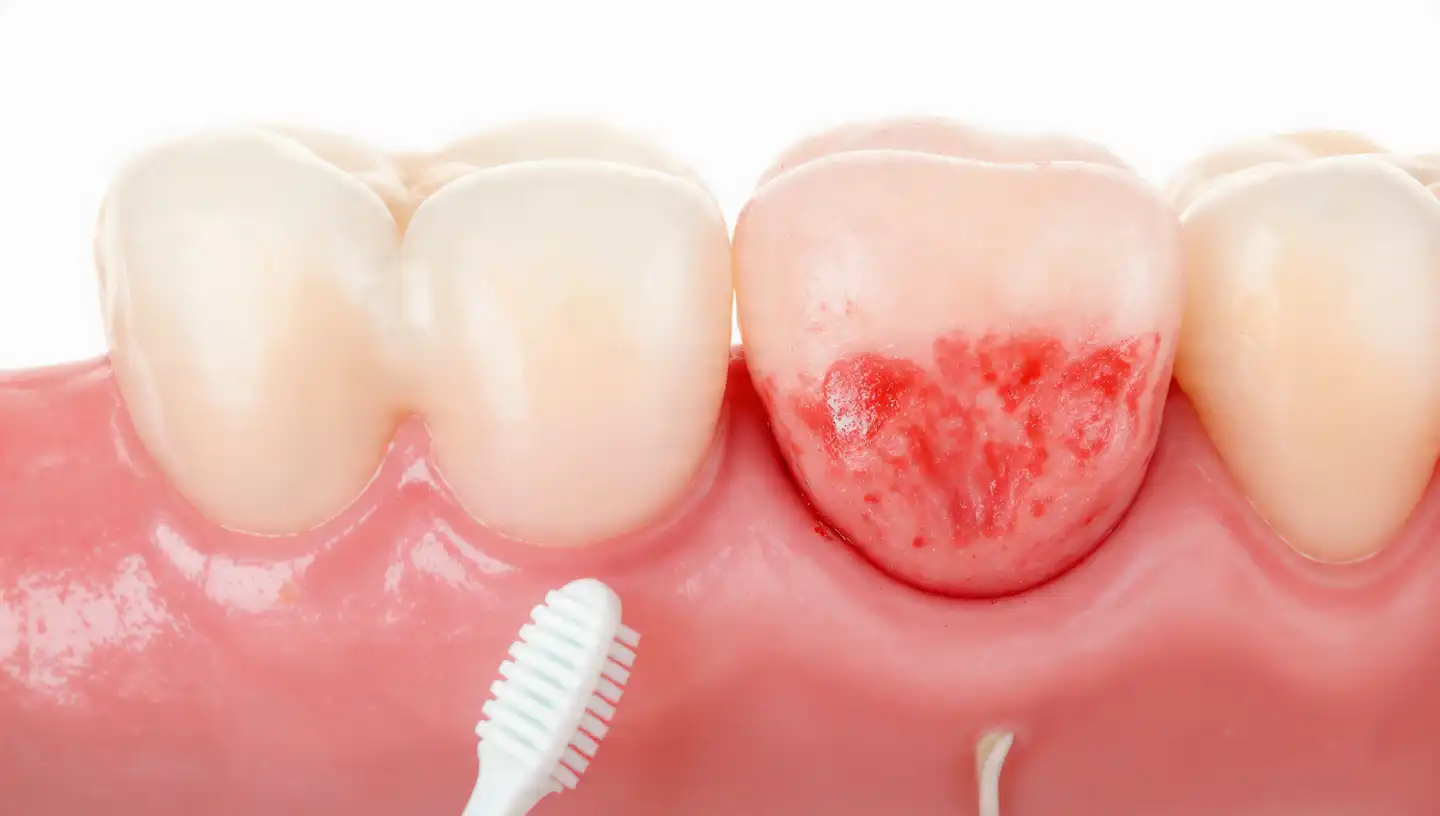
Swollen gums, or gum inflammation, occur when the gum tissue becomes red, tender, and enlarged. Most often, this is your body’s response to bacteria, plaque buildup, or irritation from your teeth or dental appliances.
Swollen gums can be mild and reversible if addressed early, but if ignored, they can develop into serious gum disease that affects the bone supporting your teeth.
Common Causes of Swollen Gums
Understanding the causes of swollen gums is the first step to preventing them. At Omabod Dental, we often see the following reasons:
Plaque Buildup
Plaque is a sticky layer of bacteria that forms on teeth. When it is not removed through proper brushing and flossing, it irritates your gums, causing swelling and tenderness.
Gum Disease
Gum disease progresses in stages:
- Gingivitis: Early gum disease. Gums may look red, swell, and bleed easily.
- Periodontitis: Advanced gum disease. The inflammation spreads below the gum line, damaging bone and connective tissue.
Without treatment, gum disease can lead to loose or missing teeth.
Localized Infection or Abscess
Sometimes, swelling occurs around a single tooth. This can indicate an infection or abscess caused by bacteria entering a cavity, crack, or injury. Pain, pus, and swelling often accompany abscesses and require professional treatment.
Hormonal Changes
Hormonal fluctuations during pregnancy, puberty, menstruation, and menopause can make gums more sensitive and prone to swelling.
Vitamin Deficiencies
Lack of vitamins, particularly vitamin C and certain B vitamins, weakens gum tissue, making it more likely to swell.
Dental Appliances and Misalignment
Braces, poorly fitting dentures, or crowded teeth can trap food or rub the gums, causing irritation and swelling.
Medical Conditions and Medications
Diabetes, immune disorders, and medications that reduce saliva can increase gum vulnerability to inflammation.
Signs and Symptoms to Watch For
Swollen gums can be mild or more serious. We recommend seeing a dentist if you notice:
- Red, puffy, or tender gums
- Bleeding when brushing or flossing
- Persistent bad breath
- Receding gum lines
- Loose teeth
- Pain or pus around a tooth
Early recognition helps prevent more serious dental problems.
What You Can Do at Home
Many mild cases of swollen gums improve with proper daily oral care:
- Brush properly: Brush your teeth twice daily with fluoride toothpaste, using gentle circular motions.
- Floss every day: Clean between teeth to remove trapped food and plaque.
- Use mouthwash: Antimicrobial or gum-protective mouthwash can reduce bacteria and soothe irritation.
- Maintain healthy habits: Eat a balanced diet, avoid smoking, and stay hydrated to support saliva production.
When to See a Dentist
Persistent or severe swelling requires professional evaluation. You should schedule a dental appointment if:
- Swelling lasts more than a few days
- The swelling is localized around one tooth
- There is pain, pus, or a bad taste
- Teeth feel loose
- Gum inflammation continues despite good oral hygiene
Early intervention can reverse early gum disease, remove tartar, treat infections, and protect your teeth and bone.
Why Early Care Matters
At Omabod Dental, we emphasize that early dental care:
- Prevents gum disease from progressing
- Protects teeth and supporting bone
- Reduces the risk of infections
- Helps maintain a healthy smile
Regular dental check-ups and cleanings are essential for long-term oral health.