What you eat and drink affects more than your overall health — it has a direct impact on your teeth, gums, and oral tissues. Modern diets, high in sugar, starches, and acidic foods, can create conditions in your mouth that lead to cavities, gum disease, and enamel erosion. At Omabod Dental, we’ve seen how diet plays a central role in maintaining a healthy smile.
How Poor Diet Harms Your Teeth
1. Tooth Decay (Cavities)
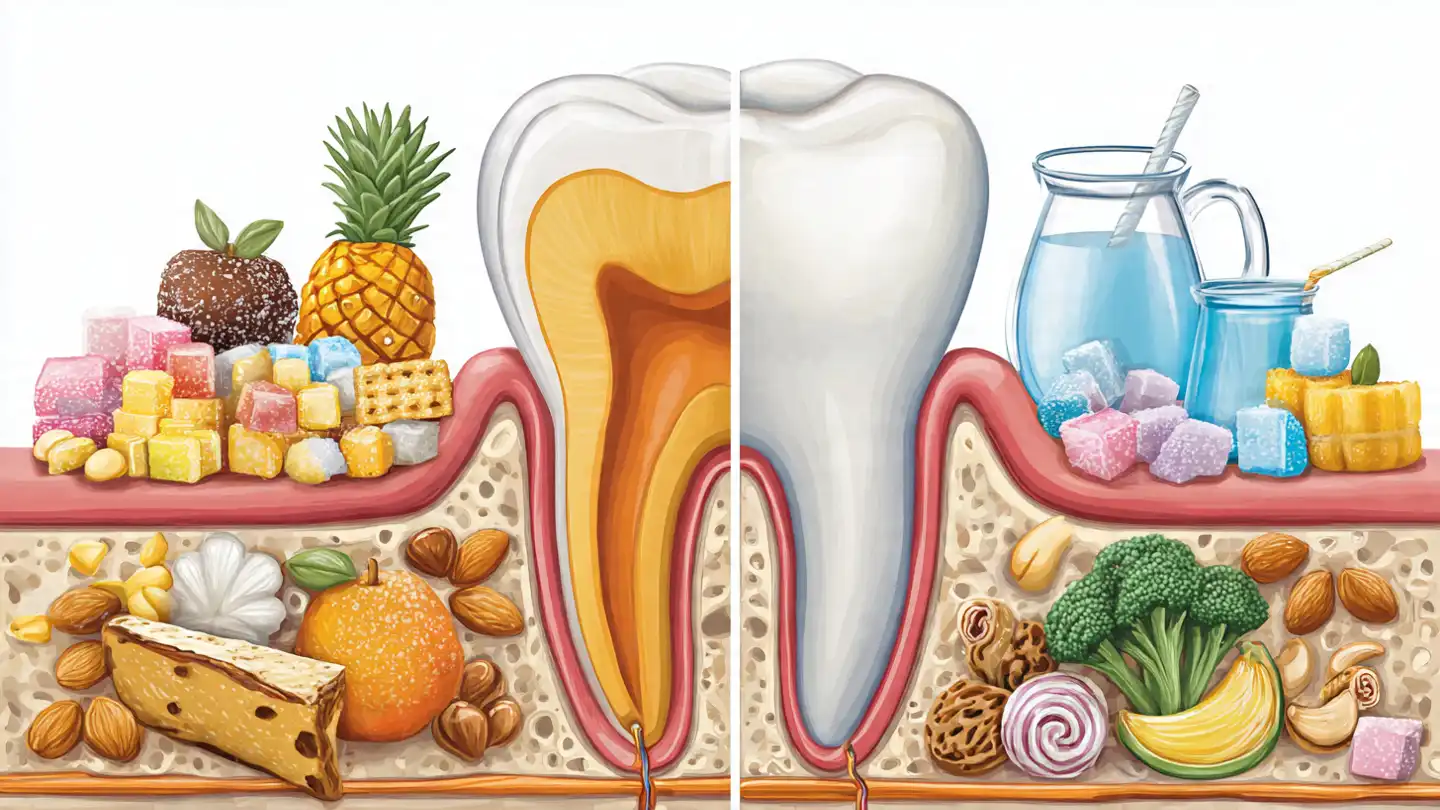
Sugary foods and drinks feed the bacteria in plaque. These bacteria produce acids that attack tooth enamel, leading to decay and cavities over time.
- Frequent exposure to sugar — even from seemingly healthy foods like fruit juices — increases acid attacks on teeth.
- Refined carbohydrates, like bread, crackers, and chips, are broken down into sugars in the mouth and similarly promote decay.
2. Gum Disease
A poor diet can weaken gum tissue and make it more prone to infection.
- Plaque buildup near the gumline causes inflammation, leading to gingivitis or more severe periodontal disease.
- Diets low in essential nutrients like vitamin C, calcium, and zinc reduce the body’s ability to fight infection and maintain healthy gums.
3. Enamel Erosion
Acidic foods and drinks — such as soft drinks, fruit juices, and energy drinks — can wear away enamel.
- Enamel erosion makes teeth more sensitive and susceptible to decay.
- The frequency of exposure to acids matters more than the amount consumed at one time.
4. Weak Teeth from Nutrient Deficiencies
Essential nutrients are crucial for strong teeth:
- Calcium and phosphorus strengthen enamel.
- Vitamin D helps the body absorb calcium.
- Vitamin C supports gum health.
A diet lacking these nutrients weakens teeth and gums, making them more vulnerable to damage and disease.
5. Increased Risk of Oral Infections
High-sugar diets and poor nutrition compromise the mouth’s natural defences, allowing harmful bacteria to thrive. This can lead to infections like oral thrush or gum abscesses.
Foods That Protect Your Oral Health
Eating nutrient-rich foods can help protect teeth and gums:
- Dairy products (milk, cheese, and yoghurt) provide calcium and phosphorus.
- Vegetables and fruits with high fibre stimulate saliva flow, neutralising acids.
- Nuts, seeds, and lean proteins support tissue health.
- Water helps rinse away sugars and acids.
Tips for Maintaining a Diet-Friendly Smile
- Limit sugary and acidic foods and drinks, especially between meals.
- Eat balanced meals to provide essential nutrients for teeth and gums.
- Rinse or brush after meals, but wait at least 30–60 minutes after acidic foods to avoid enamel damage.
- Chew sugar-free gum to stimulate saliva, which neutralises acids.
- Regular dental check-ups help catch and manage any problems early.
Simple Takeaway
A poor diet is one of the leading causes of dental problems today. Sugar, starches, and acidic foods increase the risk of tooth decay, gum disease, enamel erosion, and oral infections, while nutrient-rich foods help protect your teeth and gums. Choosing a balanced diet, practising good oral hygiene, and visiting the dentist regularly are key to a strong, healthy, and pain-free smile.