If you are considering a permanent replacement for a missing tooth, dental implants are one of the main options your dentist may discuss with you. Patients in Ghana often want to know three things first: what an implant involves, what affects the cost, and whether it is the right choice compared with a bridge or denture.
This guide explains the dental implant process, cost factors, recovery, candidacy, and alternatives so you can understand what to expect before booking an assessment.
For current Omabod implant pricing, a clinical assessment is required because the final treatment plan depends on your mouth, bone, number of missing teeth, and any preparatory treatment you may need.
What Is a Dental Implant?
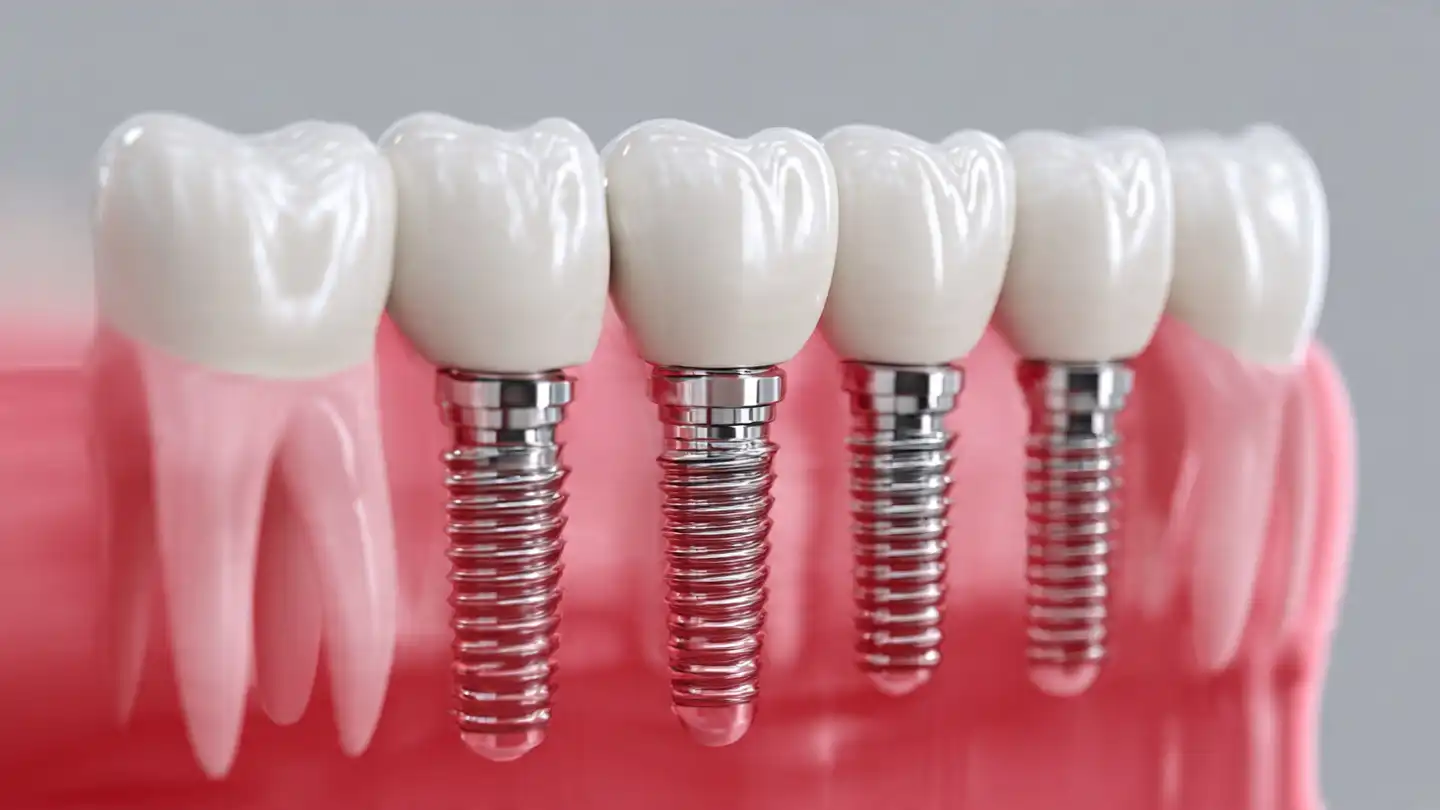
A dental implant is a small post placed surgically into the jawbone to replace the root of a missing tooth. After the implant heals and bonds with the surrounding bone, it can support a crown, bridge, or other dental restoration.
For a single missing tooth, the completed restoration usually includes three main components: the implant in the jawbone, an abutment that connects the implant to the restoration, and the visible crown that replaces the missing tooth.
Learn more about dental implant treatment at Omabod.
How Much Do Dental Implants Cost in Ghana?
There is no single dental implant price that applies to every patient in Ghana. Even when only one tooth is being replaced, the total cost depends on what is required before, during, and after implant placement.
The main factors that affect dental implant cost include:
- Number of teeth being replaced: replacing one tooth is a different treatment plan from replacing several teeth or supporting a larger bridge or denture.
- Bone available at the implant site: if the jawbone is too thin or has reduced after tooth loss, bone grafting or another preparatory procedure may be needed.
- Whether a tooth must be removed first: extraction and healing may form part of the overall treatment plan.
- Imaging and treatment planning: X-rays and, in some cases, three-dimensional imaging may be needed to assess the bone and surrounding structures.
- The final restoration: a single crown, implant-supported bridge, or implant-supported denture involves different laboratory work and materials.
- Complexity of the case: gum health, bite, medical history, implant position, and previous dental treatment can all affect planning.
This is why a clinic may not be able to give a reliable total implant price without examining you first. At Omabod, the dentist assesses your mouth and explains the treatment components before providing a treatment-specific quote.
What Is Included in a One-Tooth Implant Treatment?
When patients search for the cost of one tooth implant in Ghana, it is important to check what the quoted amount actually includes. Depending on your case, treatment may involve the consultation, diagnostic imaging, removal of a damaged tooth, bone grafting, implant placement, the abutment, the final crown, and follow-up visits.
Ask for an itemised treatment plan so you can understand which stages are included and whether any additional procedures may be required.
Who Is a Good Candidate for Dental Implants?
Many adults with missing teeth can be considered for dental implants, but suitability depends on more than the gap itself. Your dentist will assess your gums, available bone, bite, oral hygiene, medical history, medications, and habits such as smoking.
Active gum disease should be addressed before implant treatment. Smoking, poor oral hygiene, uncontrolled medical conditions, and insufficient bone can increase the risk of complications or may change the treatment plan.
If bone has reduced after a tooth has been missing for a long time, bone grafting may sometimes be considered before or around implant placement. The need for grafting can only be determined after examination and imaging.
Dental Implant Process: Step by Step
- Assessment and imaging: the dentist examines your teeth, gums, bite, medical history, and jawbone and discusses suitable tooth-replacement options.
- Preparatory treatment if required: gum treatment, extraction, bone grafting, or treatment of nearby teeth may need to happen before the implant is placed.
- Implant placement: the implant is placed into the jawbone using local anaesthesia and an appropriate surgical technique.
- Healing and osseointegration: the bone gradually bonds with the implant. This usually takes several months and varies from patient to patient.
- Final restoration: once the implant is stable enough, the dentist restores it with the planned crown, bridge, or other prosthesis.
- Long-term maintenance: regular dental reviews and thorough home care are important for the gums and bone around the implant.
How Long Does the Dental Implant Process Take?
Dental implant treatment is usually a multi-stage process rather than a single appointment. The healing stage in which bone bonds with the implant often takes several months. If you need an extraction, bone graft, gum treatment, or other preparatory care, the overall timeline may be longer.
Your dentist can give you a more realistic timeline after assessing your specific implant site and treatment needs.
What Is Recovery Like After Dental Implant Placement?
Some swelling, tenderness, bruising, or minor bleeding can occur after implant surgery. The early surgical area usually settles well before the implant has fully bonded with the jawbone.
Your dentist will give you instructions on eating, cleaning the area, medication if appropriate, and when to return for review. Contact the clinic promptly if you develop worsening swelling, severe or increasing pain, persistent bleeding, fever, discharge, or another symptom your dentist has told you to watch for.
Dental Implants vs Bridges vs Dentures
Implants are not automatically the best option for every patient. The most suitable replacement depends on your oral health, available bone, number of missing teeth, adjacent teeth, preferences, treatment time, and budget.
| Dental Implant | Dental Bridge | Denture | |
|---|---|---|---|
| Type | Implant-supported replacement | Fixed replacement supported by teeth or implants | Removable replacement |
| Surgery | Usually required | Not usually required for a tooth-supported bridge | Usually not required |
| Neighbouring teeth | A single implant can replace a tooth without using adjacent teeth for support | A conventional bridge usually uses neighbouring teeth for support | Does not normally require preparation of adjacent teeth |
| Bone | Requires adequate bone or additional planning | Does not replace the missing tooth root | Does not replace the missing tooth root |
| Cleaning | Requires careful daily cleaning and professional maintenance | Requires cleaning around and beneath the bridge | Must be removed and cleaned as instructed |
| Treatment time | Often several months | Often shorter than implant treatment | Varies by denture type and case |
See the Omabod pages on dental bridges, dentures, and tooth replacement for more information about alternatives.
Are Dental Implants Worth It?
For a suitable patient, an implant can provide a stable tooth replacement without relying on neighbouring teeth for support. It can also support a crown, bridge, or denture depending on how many teeth are missing.
However, implants involve surgery, healing time, ongoing maintenance, and a larger initial treatment commitment than some alternatives. They can also develop complications, including infection or inflammation around the implant, failure to integrate with the bone, and mechanical problems with the restoration.
The better question is therefore not simply whether implants are “worth it,” but whether they are the most appropriate option for your mouth, health, goals, and circumstances.
How Long Can Dental Implants Last?
Dental implants are designed as a long-term tooth-replacement option, but no dentist can guarantee that an implant will last for life. Longevity depends on gum and bone health, oral hygiene, smoking, bite forces, medical factors, regular maintenance, and the condition of the crown or other restoration attached to the implant.
The implant itself and the visible restoration should also be considered separately. Even when an implant remains stable, the crown, bridge, screws, or other components may eventually need maintenance, repair, or replacement.
How to Care for a Dental Implant
Implants cannot develop tooth decay, but the gums and bone around them can become inflamed or infected. Daily cleaning and professional maintenance are therefore essential.
- Brush carefully around the implant and surrounding gums.
- Clean between teeth and around the restoration using the method recommended by your dentist or hygienist.
- Attend regular dental reviews and professional cleaning appointments.
- Tell your dentist if the implant feels loose, the gums bleed or swell, or the bite begins to feel different.
- If you smoke, discuss the effect on healing and long-term implant health with your dental team.
Frequently Asked Questions About Dental Implants in Ghana
How much does one tooth implant cost in Ghana?
There is no reliable single price for every one-tooth implant case. The total depends on the assessment, imaging, whether extraction or bone grafting is needed, the implant procedure, the abutment, and the final crown. Ask for an itemised quote after a clinical assessment.
Is a dental implant a permanent tooth replacement?
Dental implants are intended to provide long-term support for replacement teeth, but they are not guaranteed to last forever. Their long-term success depends on healing, oral hygiene, gum and bone health, smoking, bite forces, general health, and ongoing professional care.
Can I get an implant after losing a tooth years ago?
Possibly. Bone often changes after a tooth is lost, so your dentist will need to assess whether enough bone remains for implant placement or whether additional treatment such as bone grafting should be considered.
Are dental implants painful?
Implant placement is generally carried out with anaesthesia so the area is numb during the procedure. Tenderness and swelling can occur afterwards. Your dentist will explain what to expect and how to manage your recovery based on the procedure performed.
Are implants better than bridges or dentures?
Not for everyone. Implants, bridges, and dentures each have advantages and limitations. Your dentist should compare the options based on the number and position of missing teeth, health of neighbouring teeth, available bone, treatment time, maintenance requirements, and your preferences.
Book a Dental Implant Assessment in Accra
If you are considering an implant, the first step is to determine whether it is appropriate for your mouth and what treatment would actually be required. Omabod Dental & Wellness Center can assess the missing-tooth area, discuss alternatives, and provide a treatment-specific plan and quote.